A Beginner’s Guide to A Webbing Journey

A Webbing Journey is a physics-based puzzle-platformer that centers entirely on movement and environmental interaction rather than combat or time-based challenges. Players control a small spider navigating enclosed spaces such as ventilation shafts and household environments, using webs to move, climb, swing, and construct pathways.
The game is designed to be slow-paced and instructional, allowing players to learn through experimentation. Progression depends on understanding how different web mechanics interact with surfaces, gravity, and level geometry rather than executing precise inputs.
Core Gameplay Structure
Each area in A Webbing Journey functions as a self-contained traversal puzzle. Instead of traditional levels with enemies or objectives, progression is achieved by reaching new spaces using web-based movement. The game introduces mechanics gradually and then combines them in increasingly complex spatial layouts.
Progression typically follows a consistent rhythm that teaches players how to read environments and plan movement paths.
- Explore the area to identify valid anchor points and traversal routes
- Use webs to create paths, bridges, or swing points
- Traverse the newly created structures to reach higher or distant areas
- Interact with NPCs to unlock or learn additional mechanics
This structure ensures that players always understand the purpose of a mechanic before being asked to use it creatively.

Movement and Surface Navigation
Movement in A Webbing Journey is built around surface adhesion rather than free jumping. The spider can walk along floors, walls, ceilings, and web structures without restriction, allowing for full spatial freedom inside enclosed environments. Gravity adapts dynamically based on the surface the spider is attached to, which means orientation shifts naturally as you move.
Because of this system, precision is less important than positioning. Moving slowly and maintaining stable contact with surfaces makes it easier to place webs accurately and avoid misalignment during construction.

Understanding Web Mechanics
Webs are the primary interaction tool in the game, and learning how different web actions function is essential for progression. The game introduces these mechanics gradually, ensuring that players understand their purpose before combining them.
Traversal webs are used to create stable, walkable paths between two surfaces, while swing webs allow movement using momentum. Traversal webs prioritize safety and control, whereas swing webs enable reaching distant or elevated surfaces that cannot be accessed directly.
Choosing the correct web type depends on the space you are trying to cross and the level of precision required.

Anchor Points and Yellow Objects
One of the most important visual cues in A Webbing Journey is the use of yellow-highlighted objects. These objects indicate fixed anchor points that are guaranteed to support web construction. Early tutorial sections rely heavily on these anchors to teach players how to build stable structures.
Yellow handles, edges, and surfaces are often placed near vertical gaps or blocked passages, signaling that web construction is required to progress. Recognizing these anchors quickly helps reduce trial-and-error and makes puzzle-solving more intuitive.

Building Structural Webs
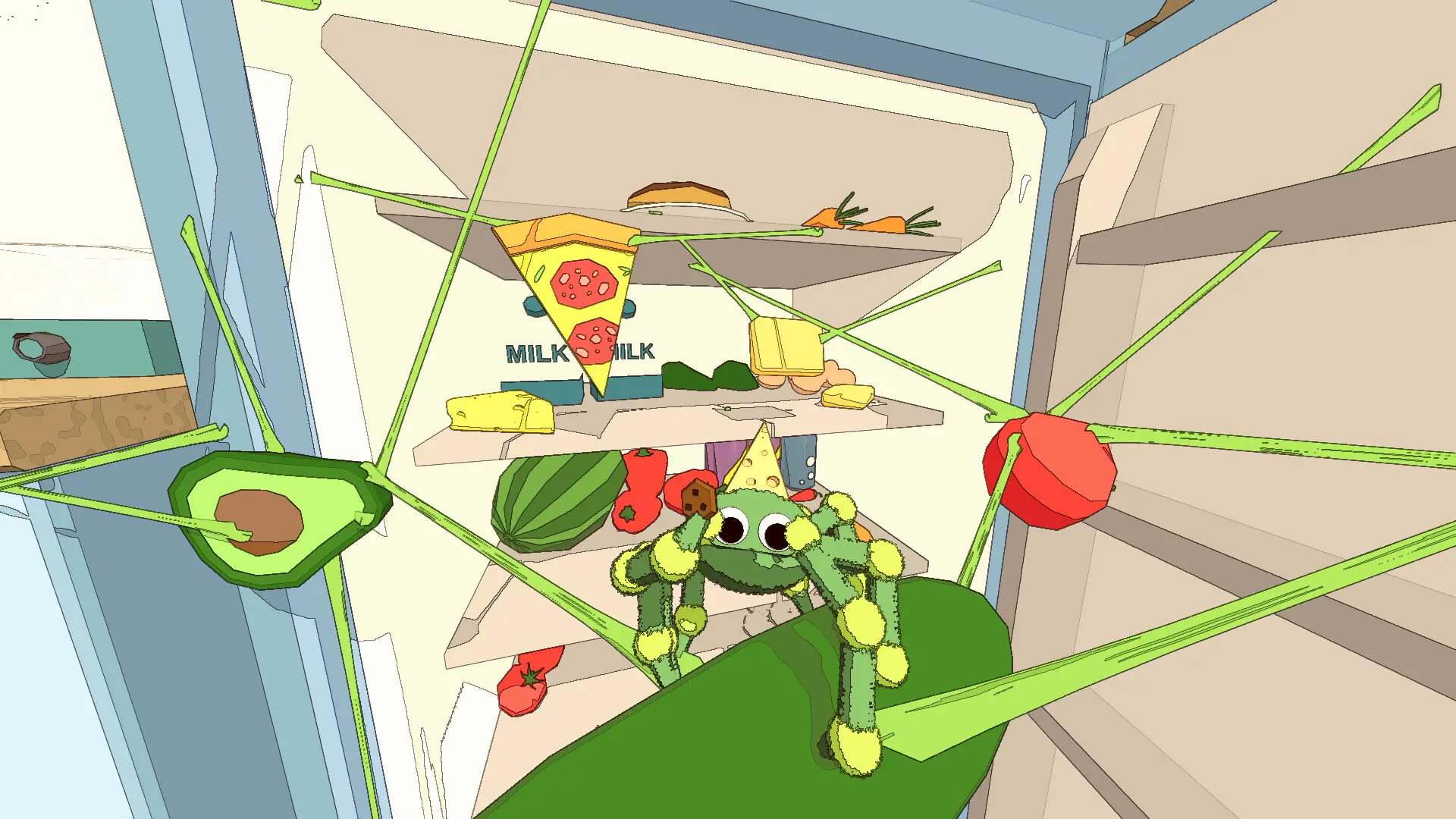
As the game progresses, players are taught how to build more complex web structures rather than simple single-line connections. Structural webs involve attaching a fixed anchor first and then extending multiple webs to other surfaces, often ceilings or upper walls.
These structures behave like temporary platforms, allowing players to walk, climb, or reposition themselves to reach new areas. Stability improves when multiple webs are used, encouraging players to think about load distribution and angle placement.
Structural building is essential for vertical progression and multi-step traversal challenges.

NPC Guidance and Tutorials
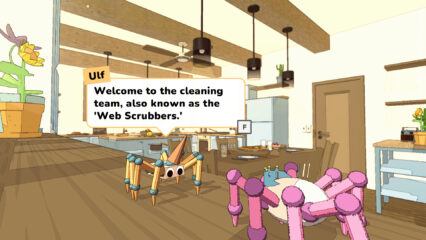
NPCs act as instructors rather than quest-givers. Each NPC interaction introduces a specific mechanic and immediately provides an opportunity to use it. Dialogue is short, direct, and focused on practical instruction, making it easy to apply the information immediately.
Skipping or ignoring NPC guidance can make later puzzles harder, as the game assumes familiarity with previously introduced mechanics. Revisiting instructions through dialogue helps clarify intended solutions without explicitly solving puzzles.

Task List and Progress Tracking
The task list functions as a soft guide rather than a strict objective tracker. It records mechanics that have been introduced and confirms when they have been successfully applied. This system reinforces learning by acknowledging mastery rather than directing players step by step.
If progress feels unclear, reviewing the task list can help identify which mechanic the current area is designed to test, making it easier to focus on the correct solution.

Deleting and Rebuilding Webs
A Webbing Journey encourages experimentation by allowing players to delete webs freely. This system removes the fear of making mistakes and supports creative problem-solving. Rebuilding is often part of the learning process, especially when experimenting with angles, swing timing, or structural stability.
Web deletion is particularly useful when refining complex structures or correcting misaligned paths that block movement.

The Hub Area and World Progression
After completing the initial tutorial sections, the game introduces a hub area that connects different themed spaces such as kitchen and office environments. The hub acts as a central navigation point and a visual marker of progression.
Each connected area reuses previously learned mechanics in new layouts, reinforcing mastery through variation rather than introducing unnecessary complexity. This design keeps the learning curve smooth and consistent.

Practical Tips for New Players
While the game allows freedom and experimentation, a few habits can make early progression smoother.
- Observe the environment carefully before placing webs, especially vertical spaces
- Use yellow anchor points as the foundation for stable structures
- Prefer traversal webs when precision matters and swing webs when distance is the goal

A Webbing Journey is built around thoughtful exploration and deliberate movement rather than speed or difficulty spikes. The early game is designed to teach players how to read environments, identify anchor points, and construct effective web paths using a small set of flexible mechanics. By taking time to understand each system and experimenting freely, players can progress smoothly and appreciate the game’s calm, physics-driven design. For the best gaming experience, play A Webbing Journey on BlueStacks!